


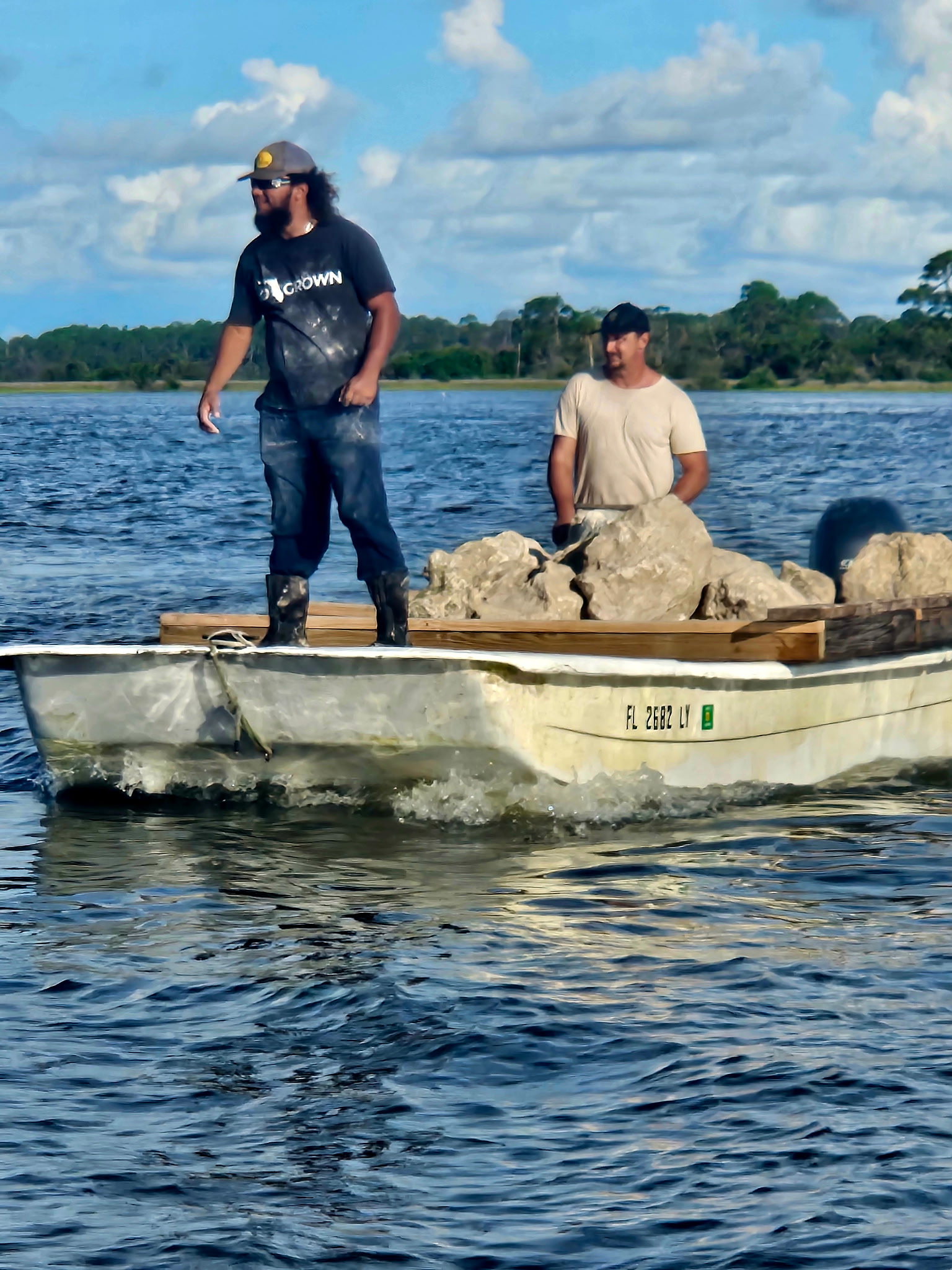
 For generations, commercial oystermen around Cedar Key and Suwannee Sound have left the dock with empty boats and returned with oysters. This summer, a new restoration project is turning that process around.
Through Oyster ROCKS, Restoration of Oyster Cultch and Knowledge Systems, local oystermen are being paid to carry limestone out to damaged oyster reefs and put reef-building material back into the water.

The approximately $2 million project is being led by Levy County with funding associated with the federal RESTORE Act, which directs money from the Deepwater Horizon oil spill settlement toward environmental and economic recovery along the Gulf Coast. Florida’s 23 Gulf Coast counties created the Gulf Consortium to develop and carry out the state’s plan for using a portion of those funds.
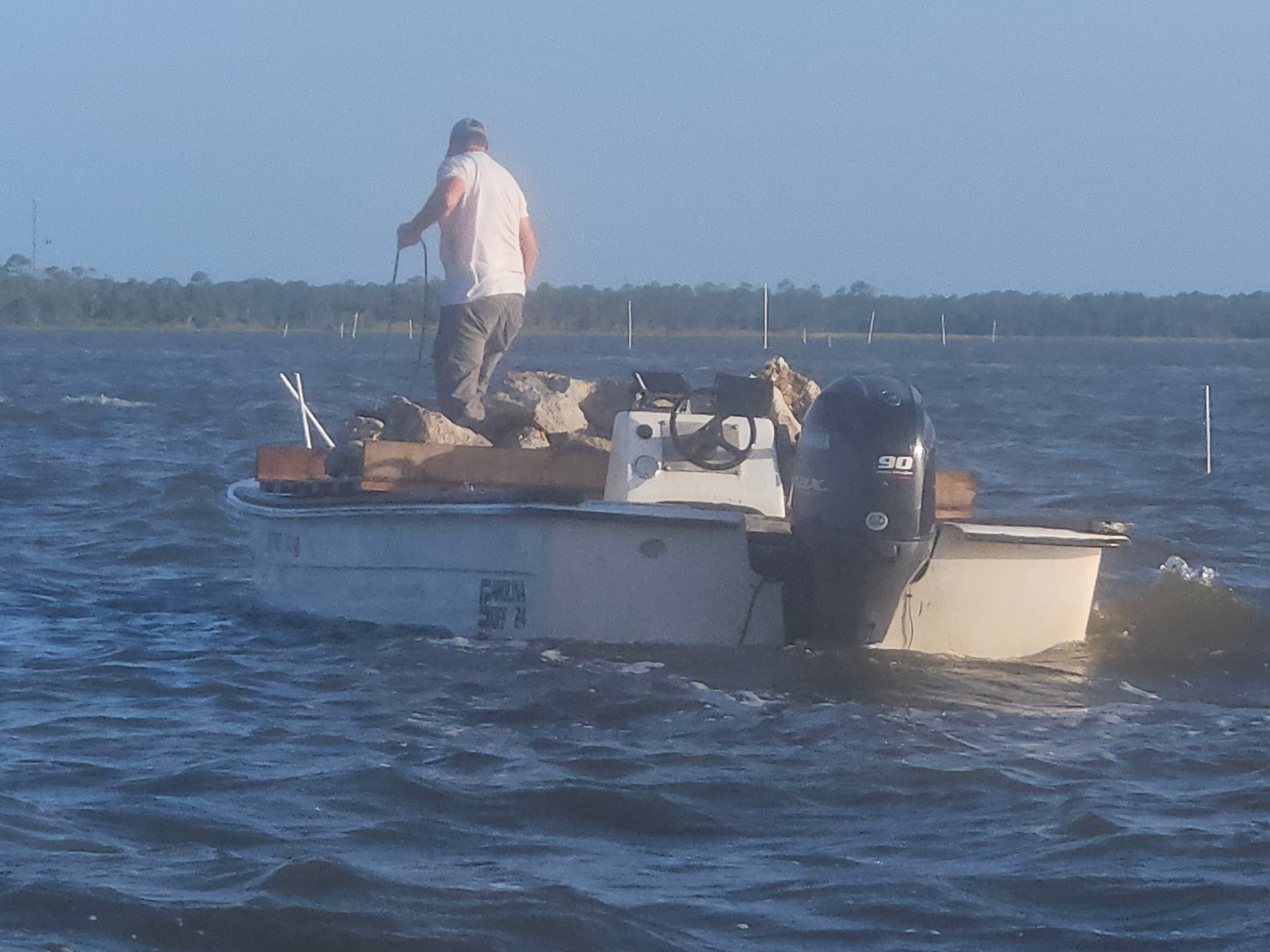 Levy County is working with the Cedar Key Oystermen’s Association, the office of State Representative Chad Johnson, SWCA Environmental Consultants, and other local and regional partners to carry out the project.
The basic idea behind the restoration is simple. Young oysters begin life as free-swimming larvae, but eventually they need a hard, stable surface, called “cultch”, where they can attach and grow. When oyster reefs lose shell and elevation over time, they can break down to the point that natural recovery becomes difficult.
Oyster ROCKS uses locally sourced limestone as replacement cultch to rebuild that reef structure in areas where oyster habitat has been lost.
The approach is based on more than a decade of oyster research and restoration in Suwannee Sound, including work at Lone Cabbage Reef. At that site, adding limestone at the appropriate reef elevation was followed by a large increase in oyster abundance. In some restored areas, oyster densities increased from very low levels to more than 200 oysters per square yard within five years.
But Oyster ROCKS is about more than rebuilding oyster reefs. The project was also designed to keep a large share of the restoration investment in the local economy.
More than 60 people from Levy County and the surrounding area are working on the project, including commercial oystermen, clam farmers, truck drivers, equipment operators, bookkeepers, and other local workers. Restoration materials, transportation, and much of the project labor are also being sourced within the region.
Approximately four out of every five project dollars are expected to go to workers and businesses in the region. Commercial fishermen working on the project are expected to receive roughly $685,000 for hauling and placing limestone cultch on the reefs.
That represents a significant investment in the area’s working waterfront. Much of the restoration work is also being scheduled during the summer oyster closure, when traditional wild-oyster harvesting and some other fishing opportunities are limited.
The project has a longer-term goal as well. In addition to restoring productive oyster habitat, organizers hope to build a local workforce with the boats, equipment, experience, and knowledge needed to participate in future coastal restoration projects.
For Levy County, Oyster ROCKS brings those restoration dollars directly to the working waterfront — putting local knowledge and local labor to work rebuilding oyster reefs while investing in the communities that depend on them.
For more information about Oyster ROCKS, contact a member of the Cedar Key Oystermen’s Association or the Levy County Board of County Commissioners.
Article by Laura Adams and Bill Pine
******

